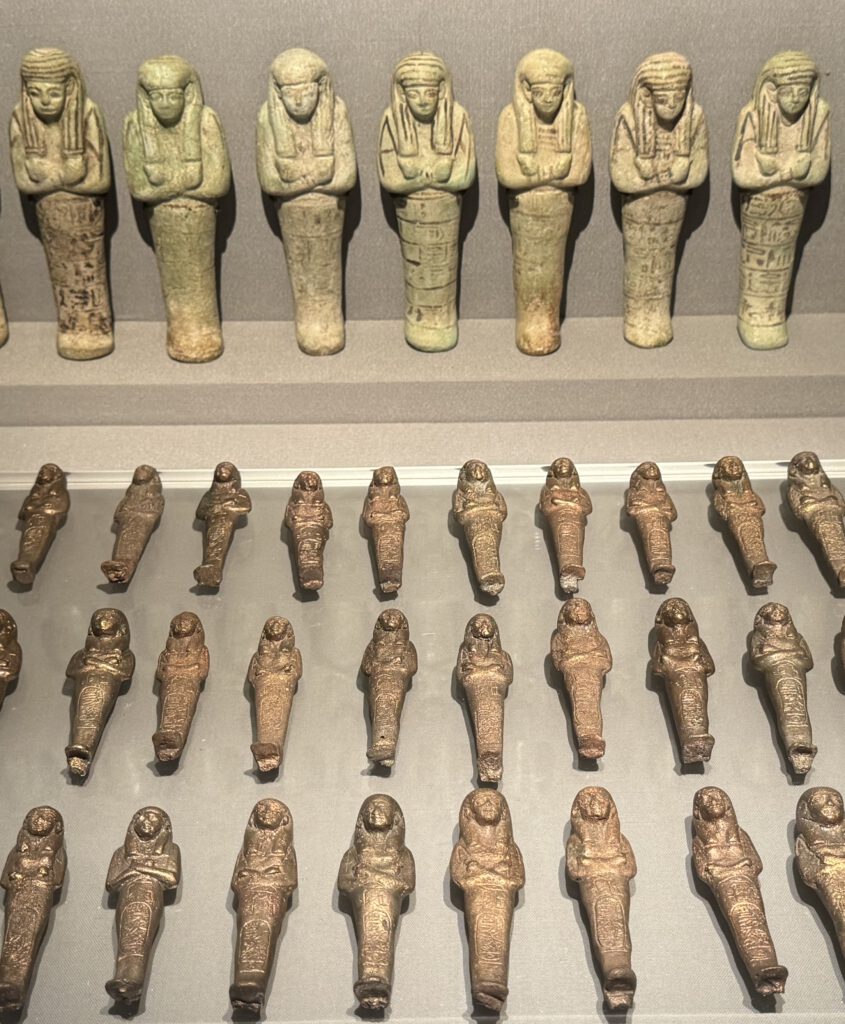
Etymological origin
The term Egyptology derives from the combination of Aigyptos, a Greek word that designates Egypt, and the suffix -logy, from logos (λόγος), in the sense of “treatise”, “discourse” or “study”. Consequently, Egyptology is defined as the discipline dedicated to the study of ancient Egypt, from a scientific and methodologically rigorous perspective.
Within this discipline, various areas of specialization are integrated, among which, to name a few, are papyrology, epigraphy, philology, archaeology and museology, as well as the analysis of funerary material culture, including shabtis or funerary statuettes.
By terminological analogy with Egyptology, the name Shabtirology could be proposed to refer to the specific study of these pieces.
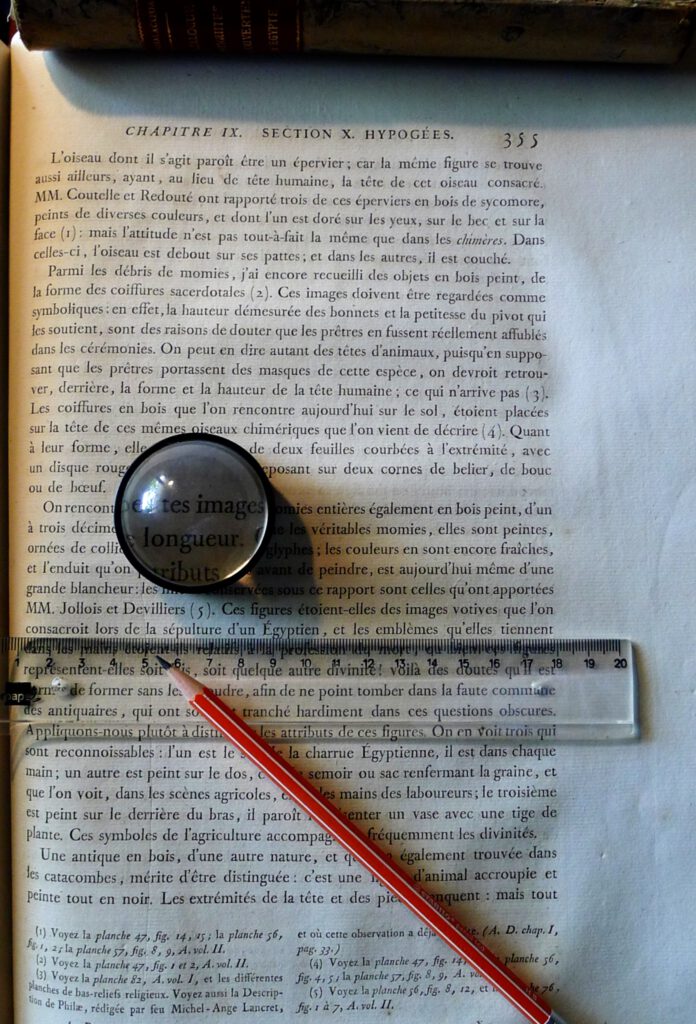
Early studies
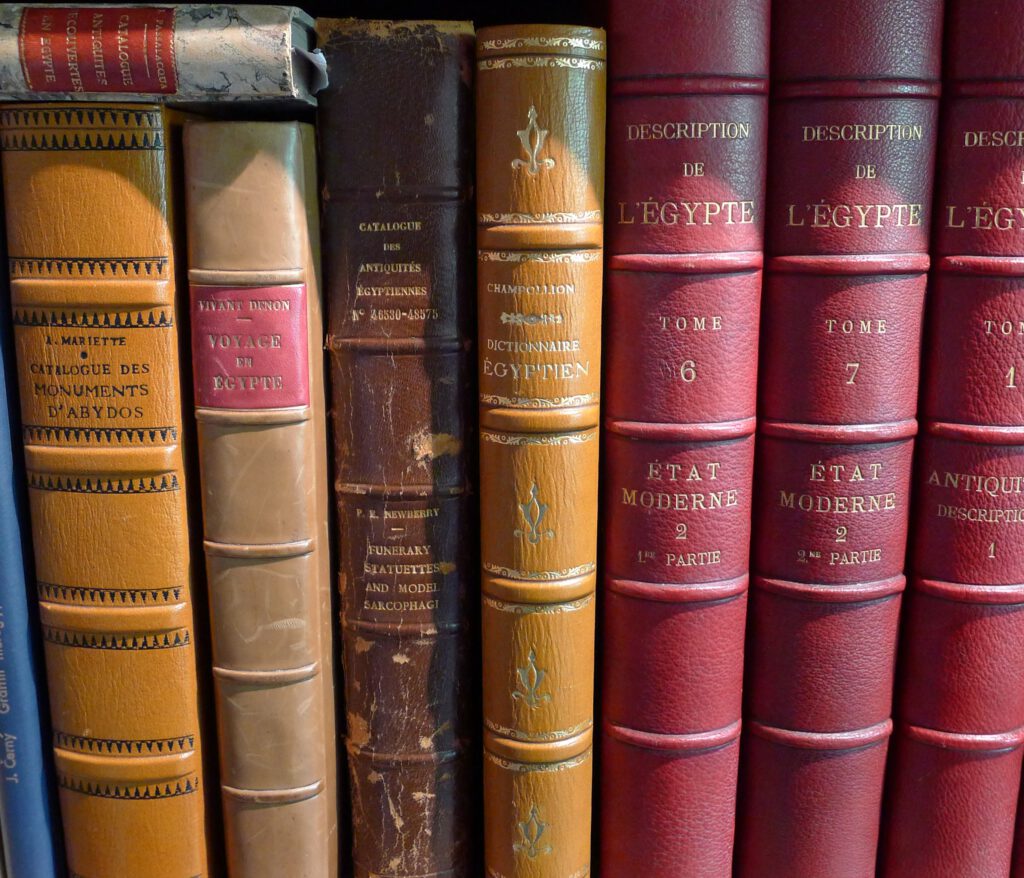
The first written reference to funerary statuettes was given to us by Vivant Denon in 1802, who called them idols. It was not until the publication of the monumental work Description de l’Égypte, between 1809 and 1828, that several statuettes were depicted and described as funerary idols. The analysis of this type of figurines began at the dawn of Egyptology as a science, with Jean-François Champollion (1827) being one of its first researchers. Other Egyptologists who also took notice of them included Passalacqua, Leemans, and Mariette.
The first monographic study on shabtis was carried out by François Chabas in 1863. From him onwards, several Egyptologists dedicate part of their careers to studying this type of object. We have names of great classics such as Spelelers (1923), Newberry (1932) and Petrie (1935), who would be followed by figures of the stature of Schneider, Aubert, Bovot, Stewart, Chappaz, Schlögl and so many others.
Shabthyrology today
Shabtirology currently boasts a significant number of researchers, some of whom are authors of prominent websites dedicated to this field of study.
Likewise, there are numerous professional Egyptologists who have focused their efforts on this subject and have produced highly relevant publications, several of which are included in this page’s bibliography.
This work is in no way intended to be equated with that of these specialists, nor would it be possible, given the extremely high level of knowledge and methodological rigor that characterizes their research.
Beyond websites, specific groups can also be identified on digital platforms like Facebook.
The first group I belonged to was created on Yahoo under the name Ushabti-1, around the year 2005. At that time, the number of shabti enthusiasts was very small.
It was in this context that I had the opportunity to meet people like Miguel Ángel, Tim, Benjamin, Dick, Jonathan, Niek, and Sue, among many others. Progressively, a critical mass of some relevance began to form, characterized by the constant exchange of viewpoints regarding recently acquired pieces or specimens observed in museum collections. Without being fully aware of it, we were contributing to the formation of a large group of shabtirology specialists. Most of the members of that first group remain active today, sharing knowledge and keeping this common hobby alive.