Description
Ramesses IV (Hq3-m3at-Ra1)
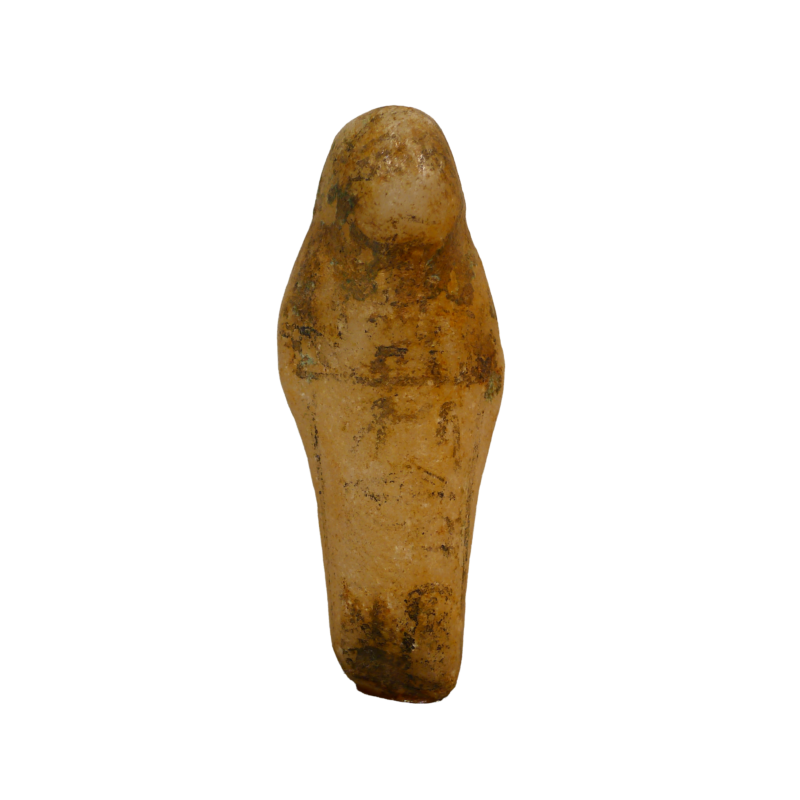
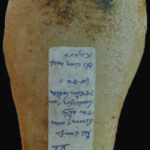
Mummiform statuette of the “contour perdu” or “peg shabti” type.
The facial features are drawn directly onto the wax, in black. The eyes are still visible, as is the mouth, barely a line. The tripartite wig is a broad dark stroke. The crossed arms are difficult to make out, as are the agricultural implements it certainly held.
On the back, the wig is clearly visible, in greenish and black tones. Below it, a stain seems to indicate the presence of the remains of a grain sack.
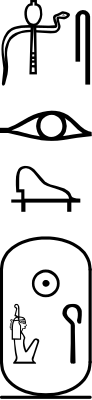
Beneath the arms, and framed by a vertical stroke, the remains of the inscription appear; by comparison with other similar specimens, we can read it in full. The cartouche is located at the lower right, as we look at the statuette.
Hieroglyphic transcription
Comments
Statuette acquired at auction2 , as part of a lot of two alabaster pieces. The explanation given by the cataloguer fails to identify the name of such an important figure.
Ramesses IV, third king of the 20th Dynasty, was the fifth son of Ramesses III. His mother was Queen Isis. He began to reign at the age of 48, and his reign lasted only seven years. During it, the trial concerning the harem conspiracy took place, which ended the life of his progenitor. He is also known for having undertaken the restoration of temples and begun new ones.
There has been debate as to why this crude and simplistic form of the so-called “contourless” shabtis exists, the most widespread view being that it corresponds to the country’s decline, beginning with the reign of Ramesses IV. This explanation is difficult to accept when we consider the fine example of this monarch, currently in the Louvre Museum, made of stuccoed and painted wood, or the faience shabti preserved in Cairo3. It is possible that the provenance of both is not KV2 but the sanctuary of Abydos.
On the back of our specimen, there is an old label with the following text, translated from Dutch: Ramses VI in alabaster. The only king of whom none of his statuettes has feet. 1000= Therefore it is not broken4.
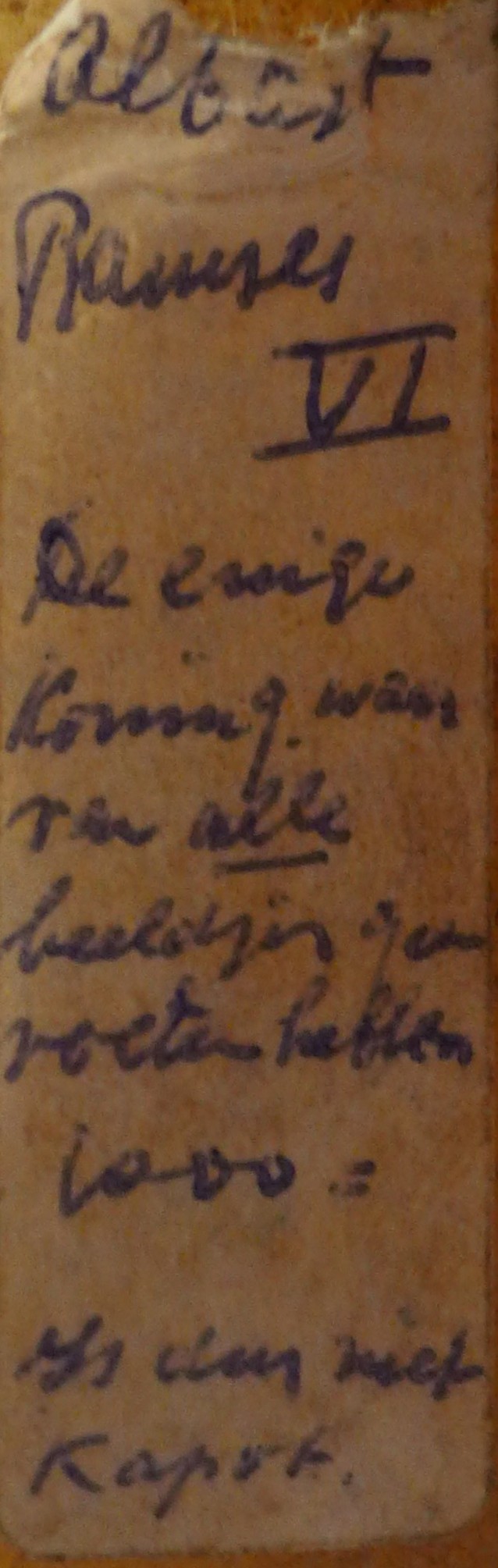
The comment is curious for two reasons. First, the obvious error in the name, confusing this Ramesses IV with VI. Second, the reference to broken feet. Indeed, all alabaster specimens of Ramesses IV lack feet, with the lower part rounded. Although this feature also seems to occur in the statuettes of Ramesses VI (and even Ramesses VII)5.
Ramesses IV
Heqa-m3at-Re
Current location
Colección particular. Barcelona.
Origin
KV2 (West Thebes)
Ex Bodo Bless collection (Auction acquisition 1)
Material
Alabaster, black paint, and traces of green wax.
Dimensions
10.3 x 4.2 x 2.5
Dating
20th Dynasty
Bibliography
This specimen is unpublished.
For the individual, see other alabaster specimens in Loffet 2013.
Typology
3.2.0 Tc: Cl.VG/ W4 H8 I0 B0 A0 Tp 7a
Transliteration
sHD Wsir Hq3 M3at ra
Translation
The illuminated one, the Osiris Heka-maat-ra (Ra is the ruler of justice)
Author of this record
©Javier Uriach