Description
Djehutyemheb1
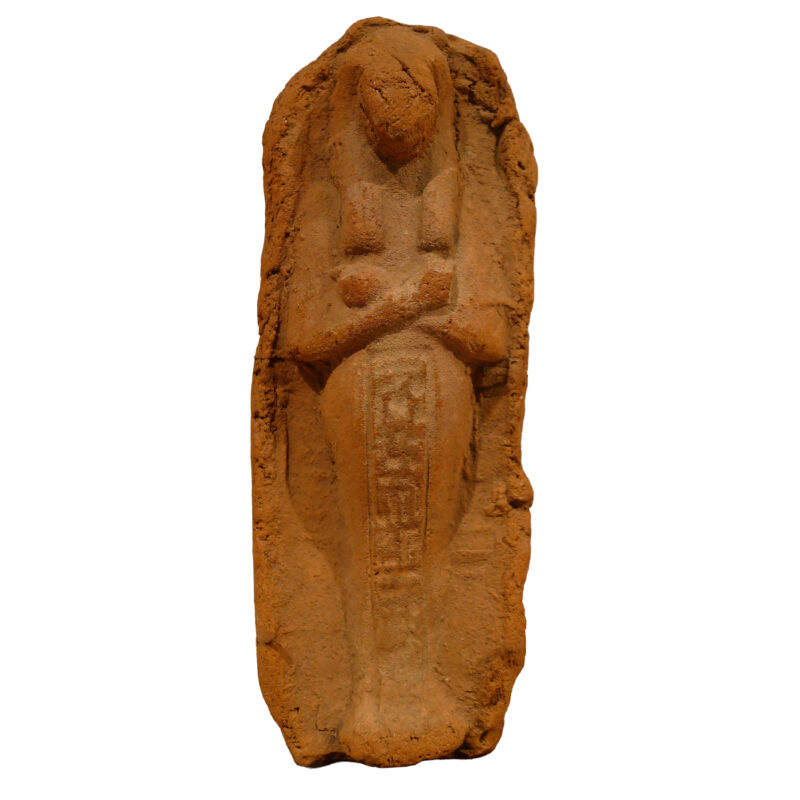
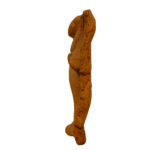
Mummiform figure with definition only on its front, the back being roughly molded. The edges are untrimmed.
The mummy appears to lie on a type of bed or lid. The figure has well-defined main characteristics: a tripartite wig, the shape of the face (though not its facial features), crossed arms (right over left), closed hands with prominent thumbs. They seem to be grasping something undefined, but there is no trace of anything. The base of the feet is rounded.
Below the arms, two vertical lines frame the text with the name and title of the shabti’s owner.
Hieroglyphic transcription

Comments
The statuette was acquired at auction2. It corresponds to a very peculiar type of shabti from the late New Kingdom (Dynasties XIX-XX). Similar examples of this type of statuette modeled in clay or terracotta can be found in various museums, such as those in Florence, Manchester, Vienna, or Hildesheim, to name a few3.
We have only found statuettes of the same individual in the Cairo Museum. Newberry collected six examples in his work, among which at least a pair wear the typical kilt of the living and carry agricultural tools in their hands (see b/w photograph). Newberry’s dating is incorrect4.
Currently, two examples are on display in the former Egyptian Museum in Cairo (snapshot). Their reference numbers differ from those listed in Newberry’s publication (current 7957 and 7958 versus the British Egyptologist’s 48134 and 48135).
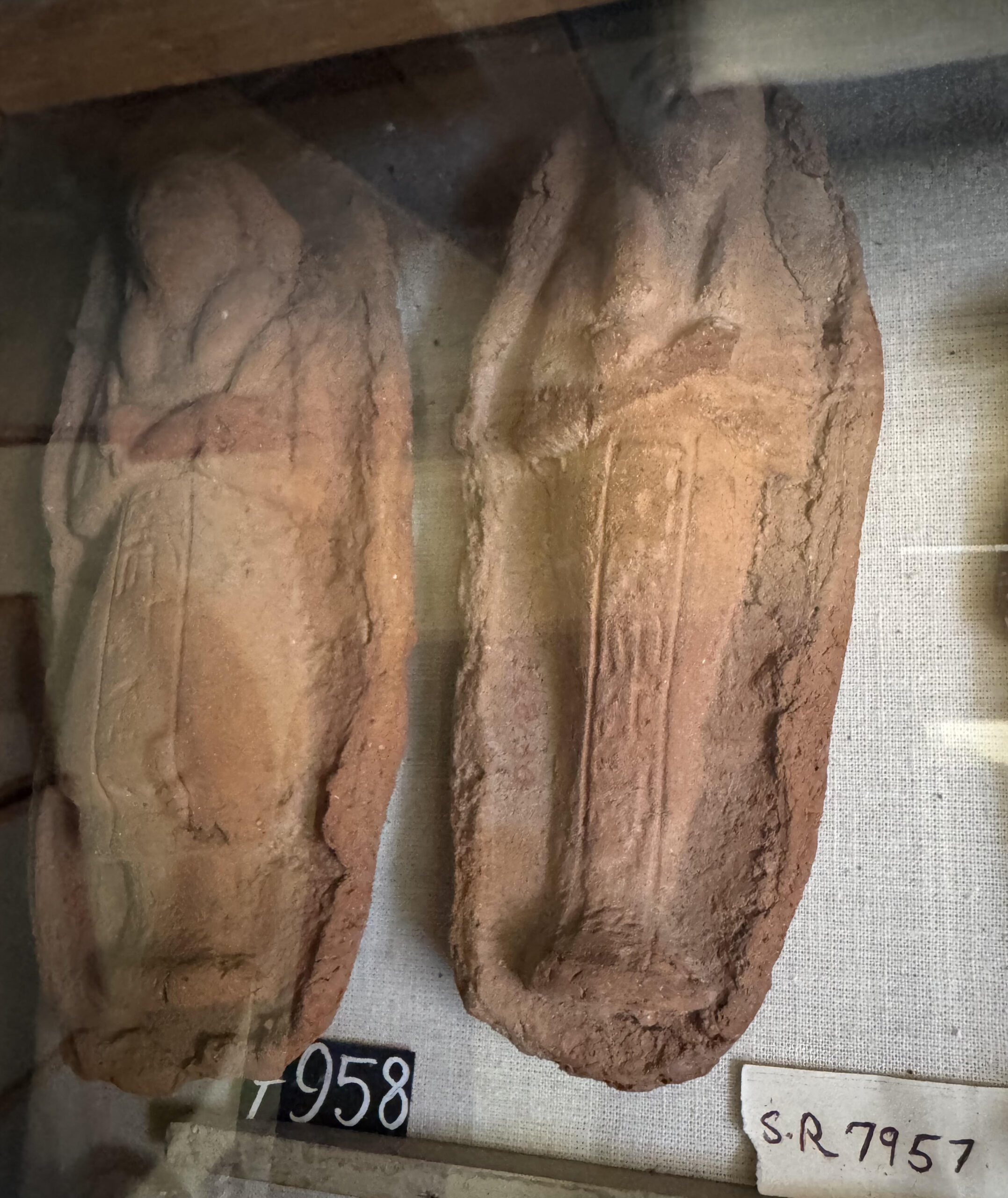
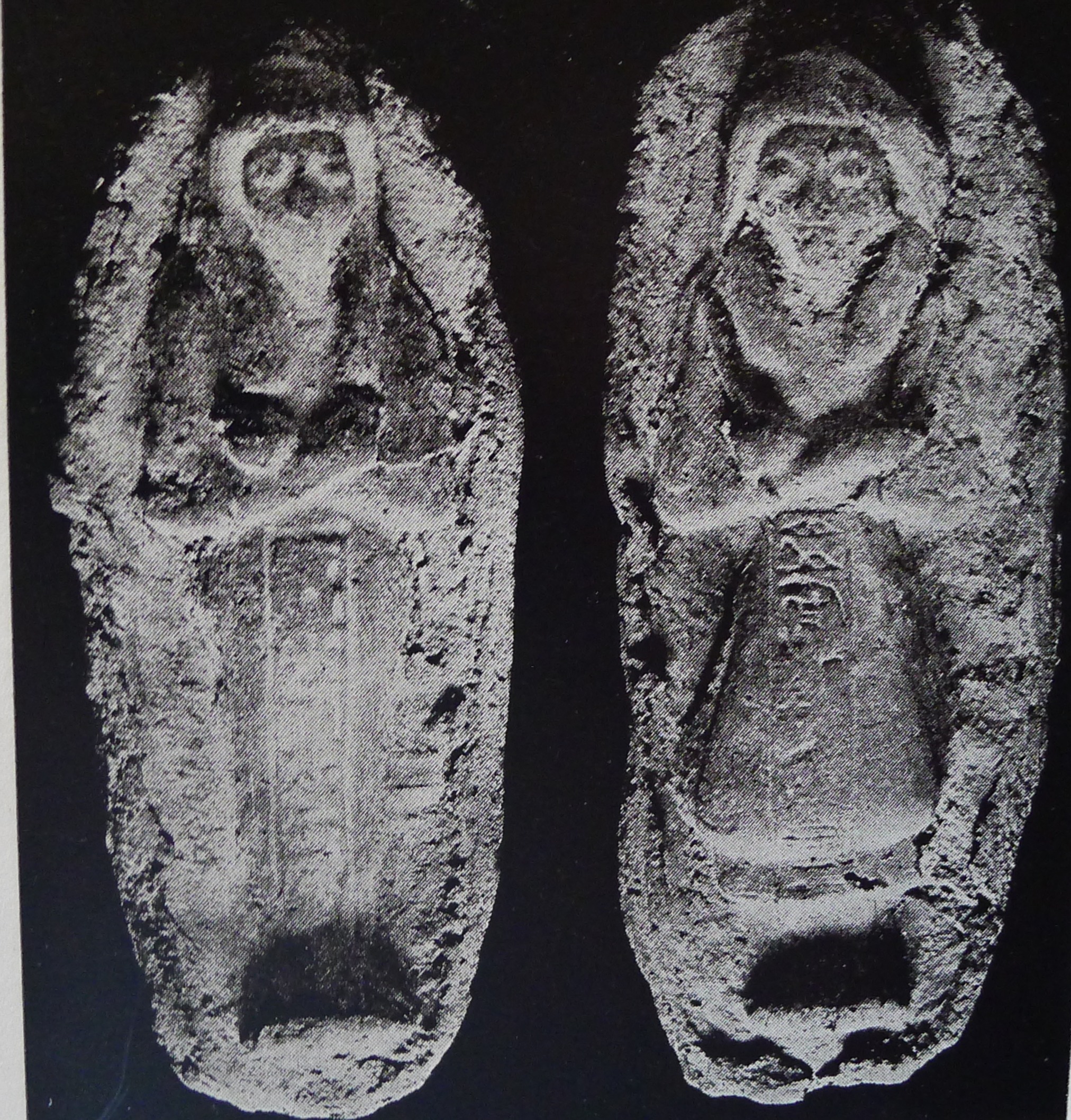
We know nothing about the individual. He must have been an important courtier, as he held the titles of pure priest and scribe of the god in the temple of Amun5.
Djehutyemheb
DHwty-m-Hb
Current location
Private collection. Barcelona
Origin
Thebes
Ex Bodo Bless collection
Material
Terracotta
Dimensions
14.4 x 5.2
Dating
Dynasty XIX
Bibliography
Unpublished. For other examples of the same figure, see Newberry 48130
Typology
3.5.1 Tc:VF / W16 H1 I0 B0 A0 Tp 7c
Transliteration
Shd wsir wabs S nTr m Imn pr DHwty-m-Hb
Translation
The illuminated one, the Osiris of the pure priest (and) scribe of the god in the temple of Amun, Djehutyemheb
Author of this record
©Javier Uriach